Subtasks
Break big tasks into smaller, trackable pieces. Subtasks let you attach child tasks to a parent so you can manage complex work without losing the bigger picture.
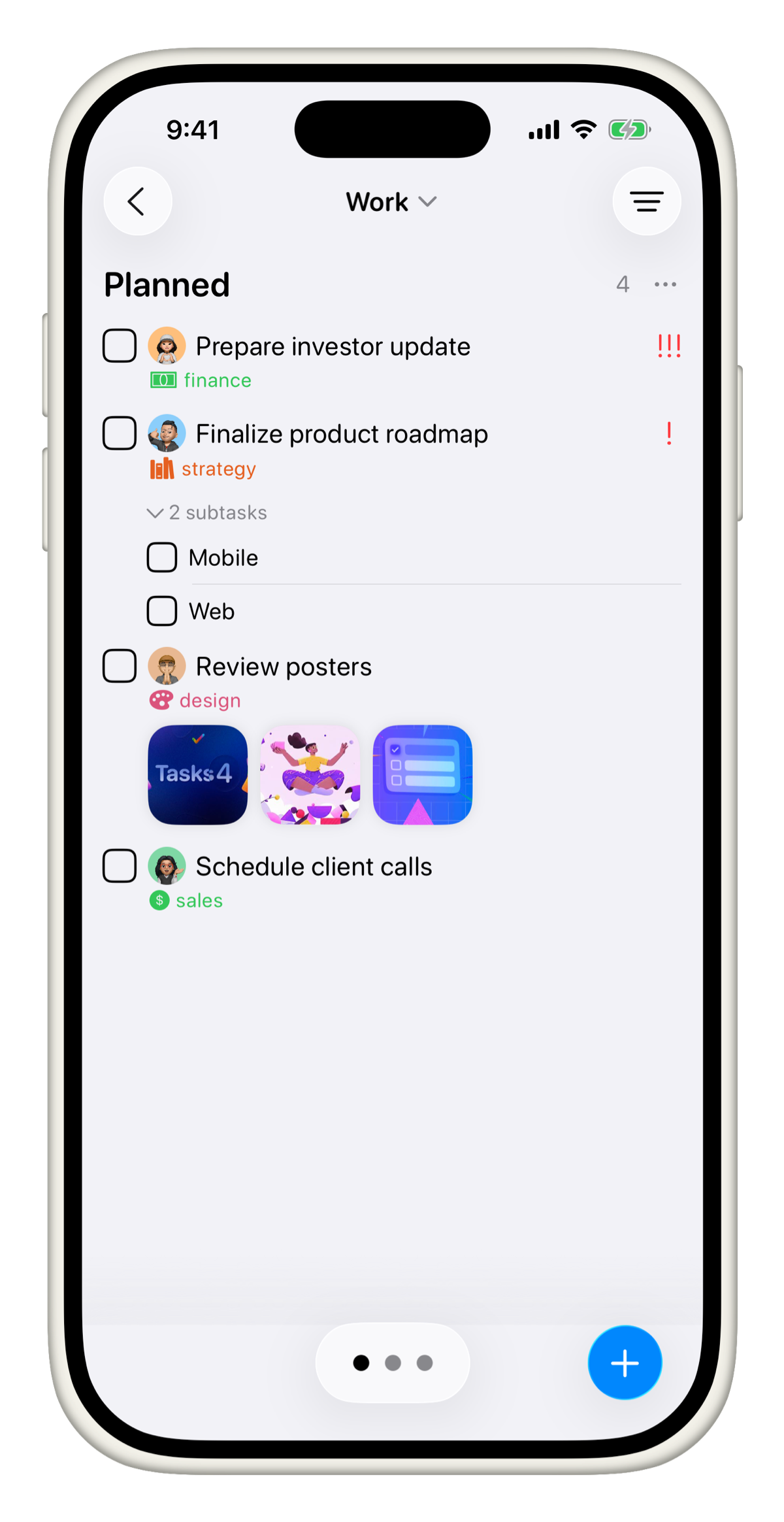
Enable subtasks for your project
Subtasks are not enabled by default on every project. If you do not see the Subtasks section inside a task, you need to add it first.
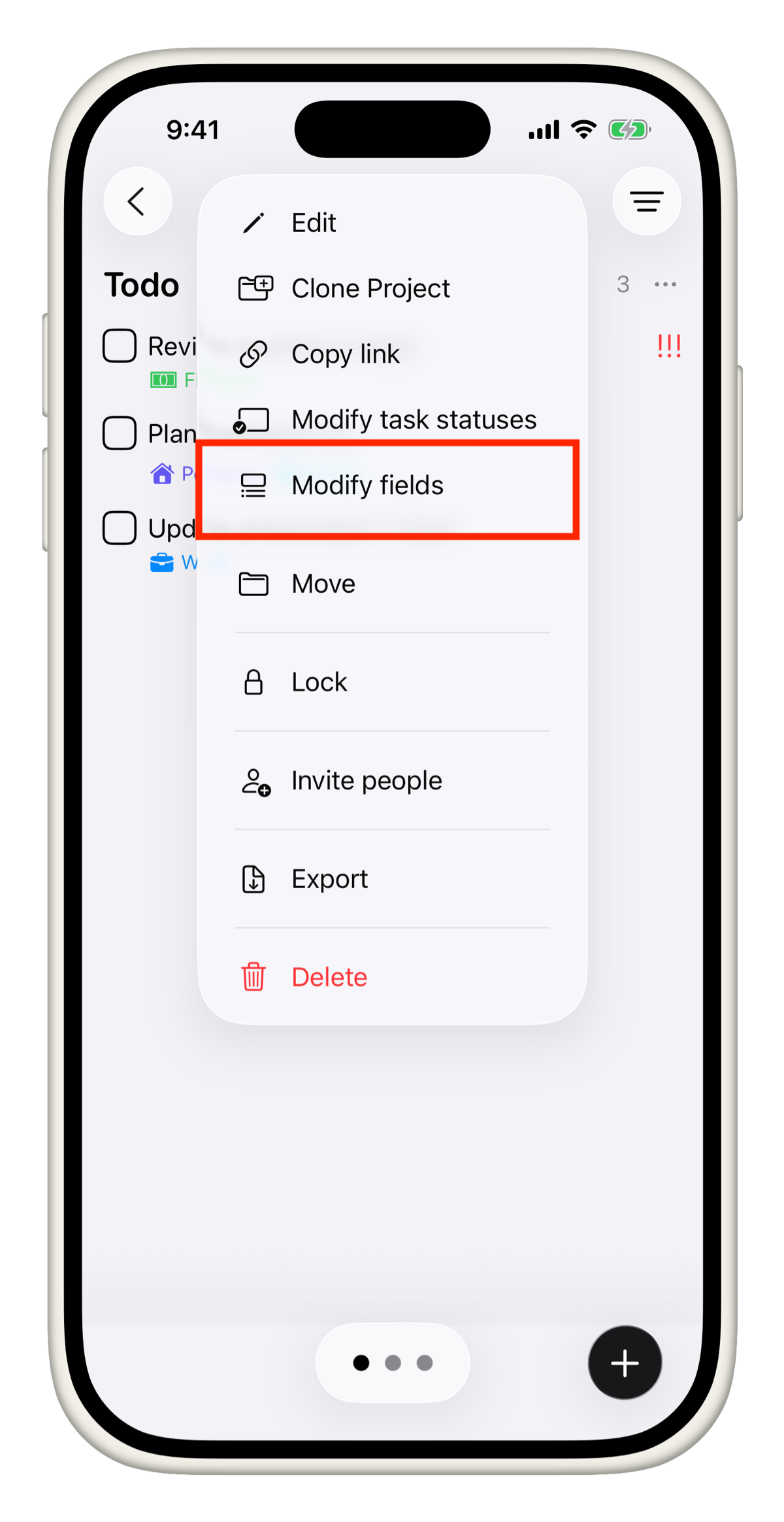
- Long press (or right-click) on your project in the sidebar.
- Tap + then select Modify Fields.
- Add the Subtasks field.
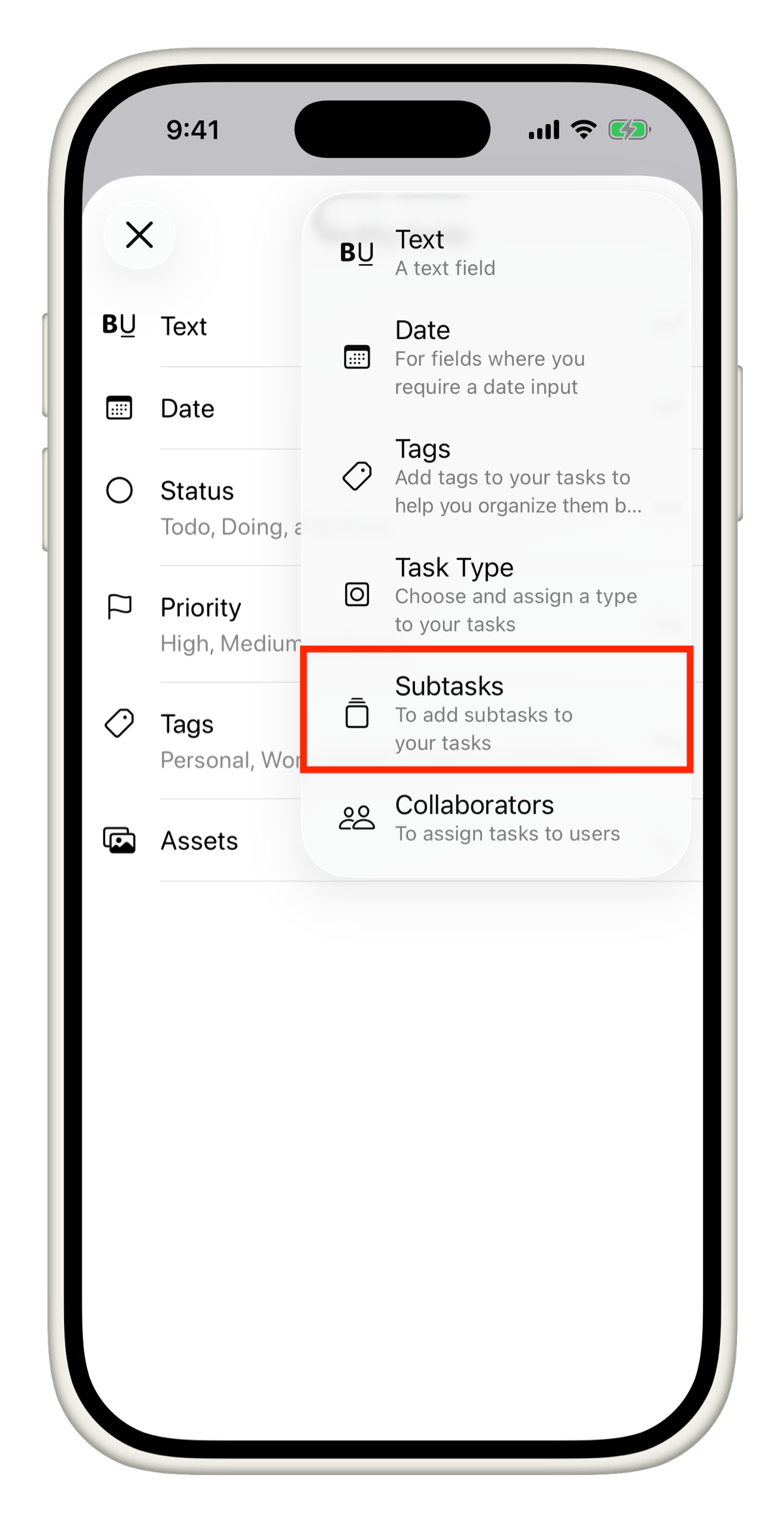
Once added, every task in that project will have a Subtasks section ready to go.
Add a subtask
There are two ways to add a subtask.
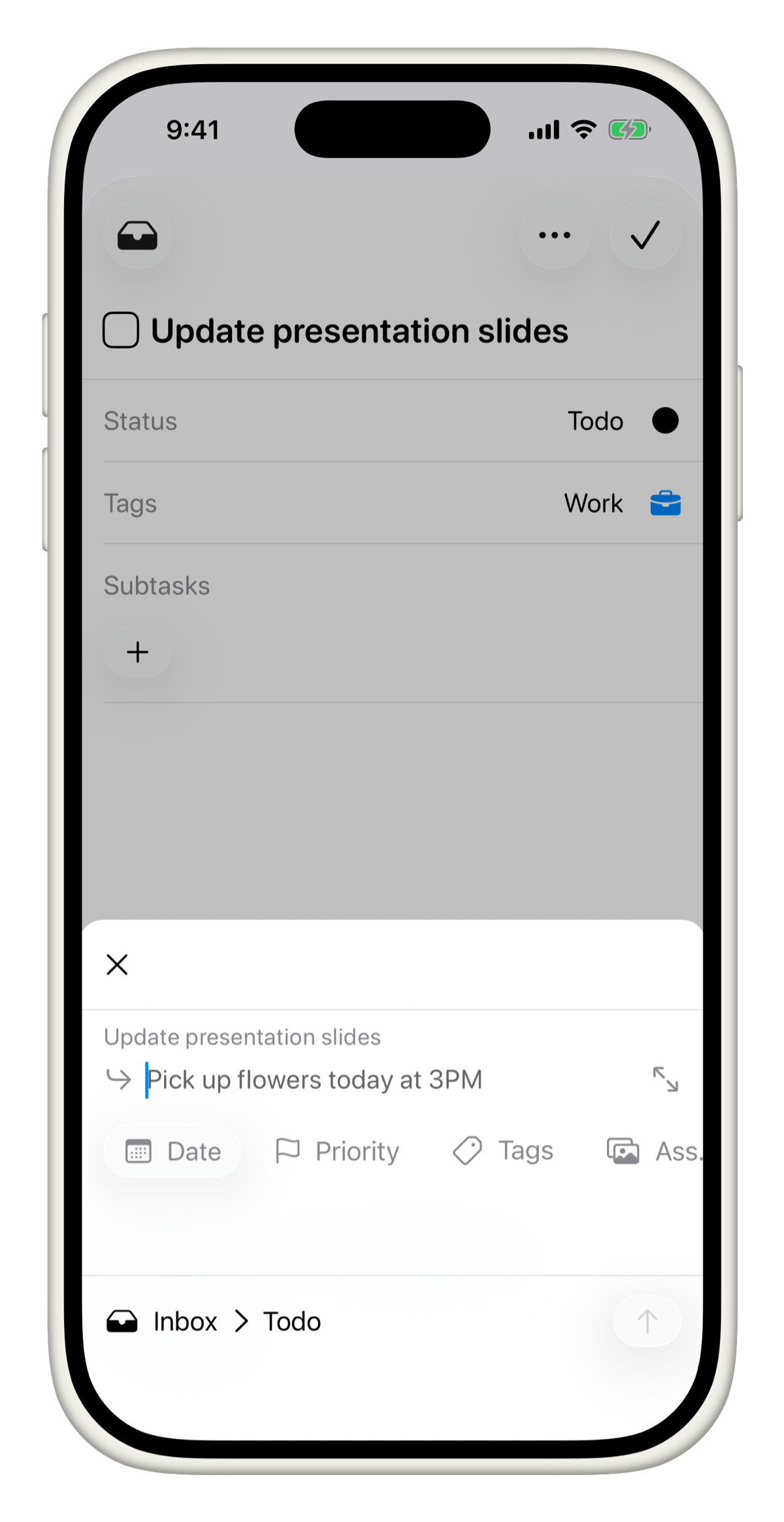
From inside a task:
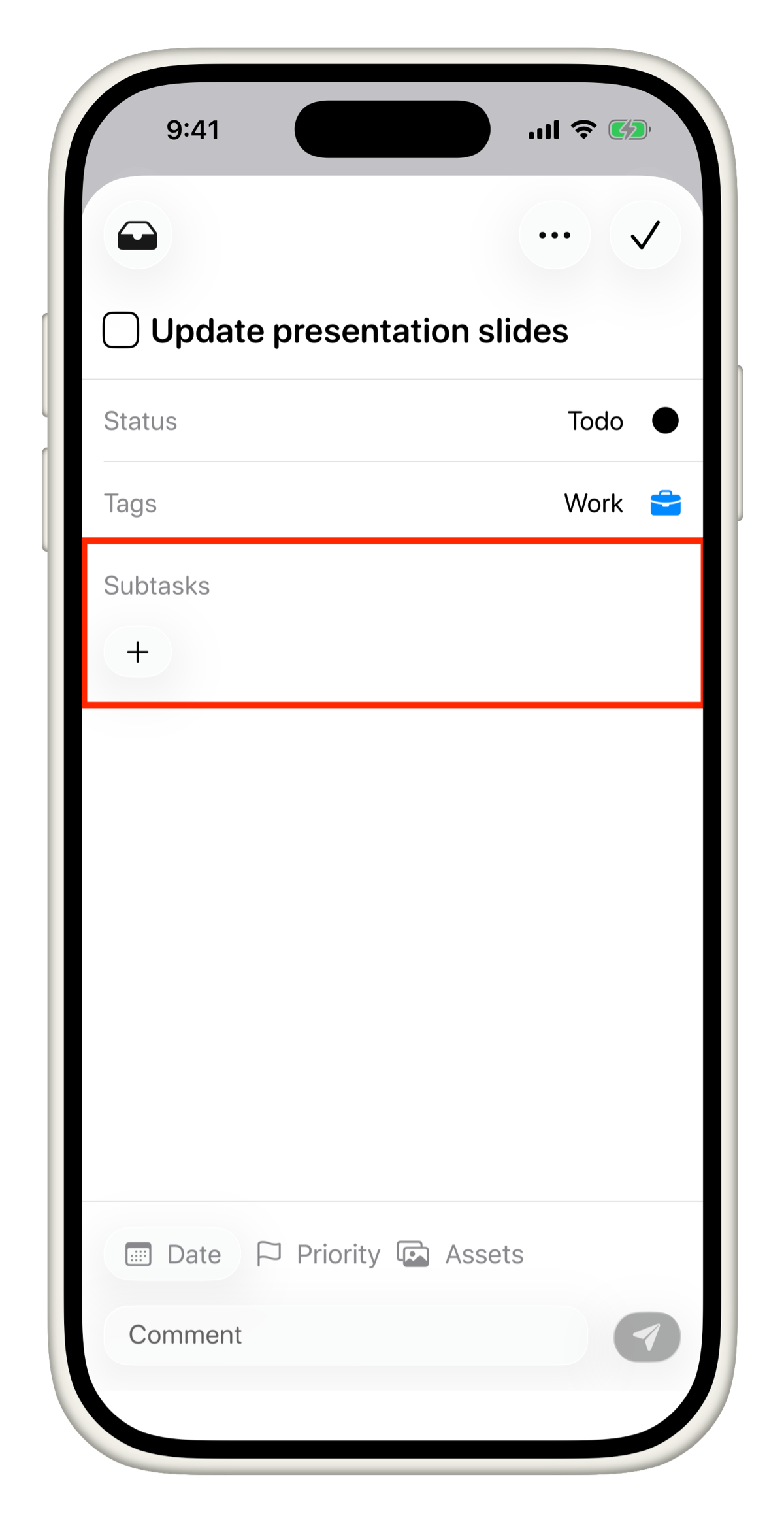
- Open the task you want to add a subtask to.
- Scroll to the Subtasks section.
- Tap + and start typing.
By dragging:
- Find the task you want to turn into a subtask.
- Drag it onto the task you want to be the parent.
- Hold for 3 seconds until it attaches.
Just like regular tasks, subtasks support all the same fields: dates, priorities, tags, assignees, and more.
Tasks only supports one level of nesting. A subtask cannot have its own subtasks.
Detach a subtask
To remove a subtask from its parent without deleting it:
- Long press (or right-click) on the child task.
- Select Detach from parent.
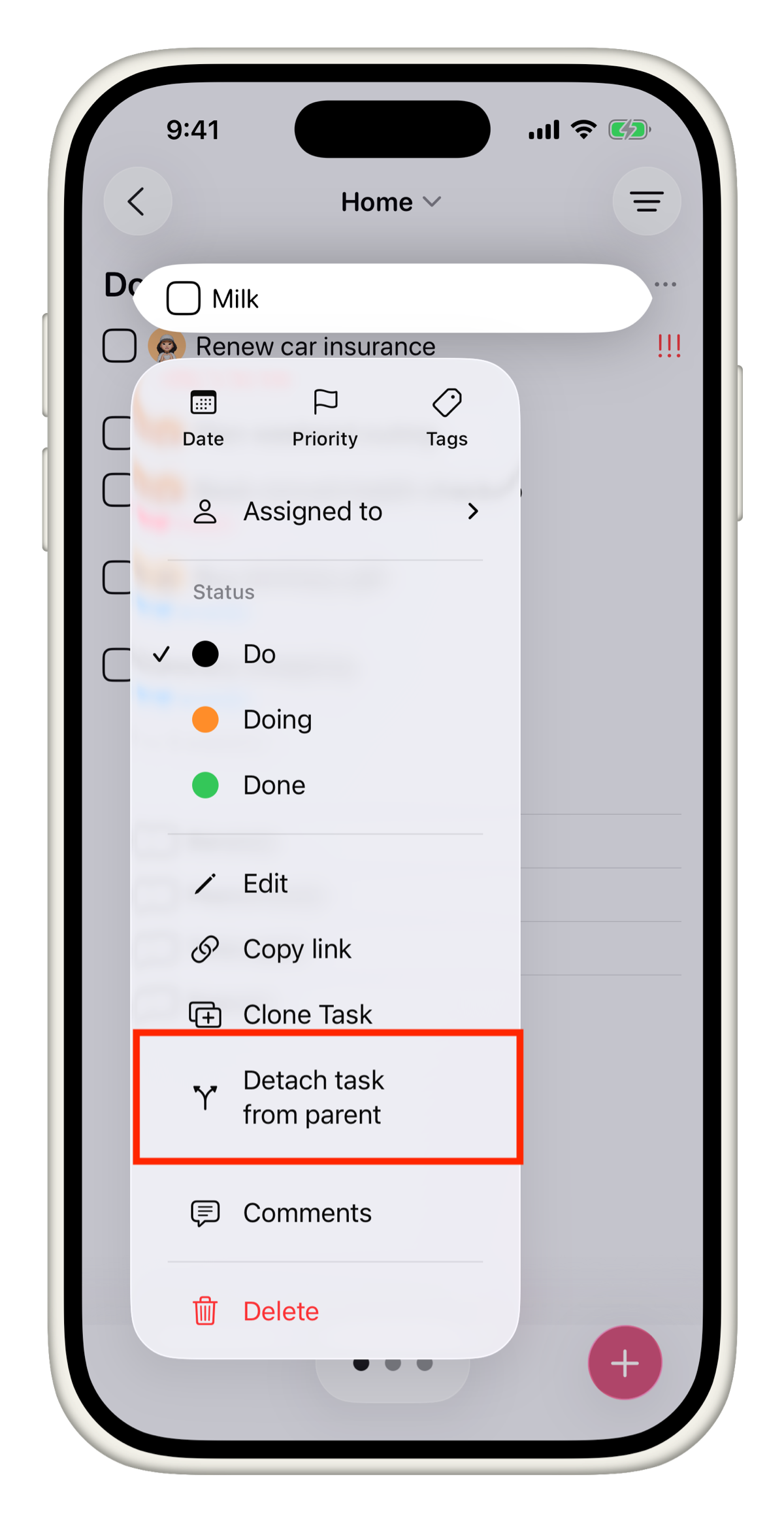
The task will return to the board as a standalone task in the same column.
How subtasks behave on the Kanban board
Completing the parent task:
When you mark a parent task as complete, all of its subtasks are automatically marked complete too.
Completing individual subtasks:
When you complete a subtask individually, it moves to the next column on the board. The parent task also appears in that next column with its current color, so you always have context on where the overall task stands.
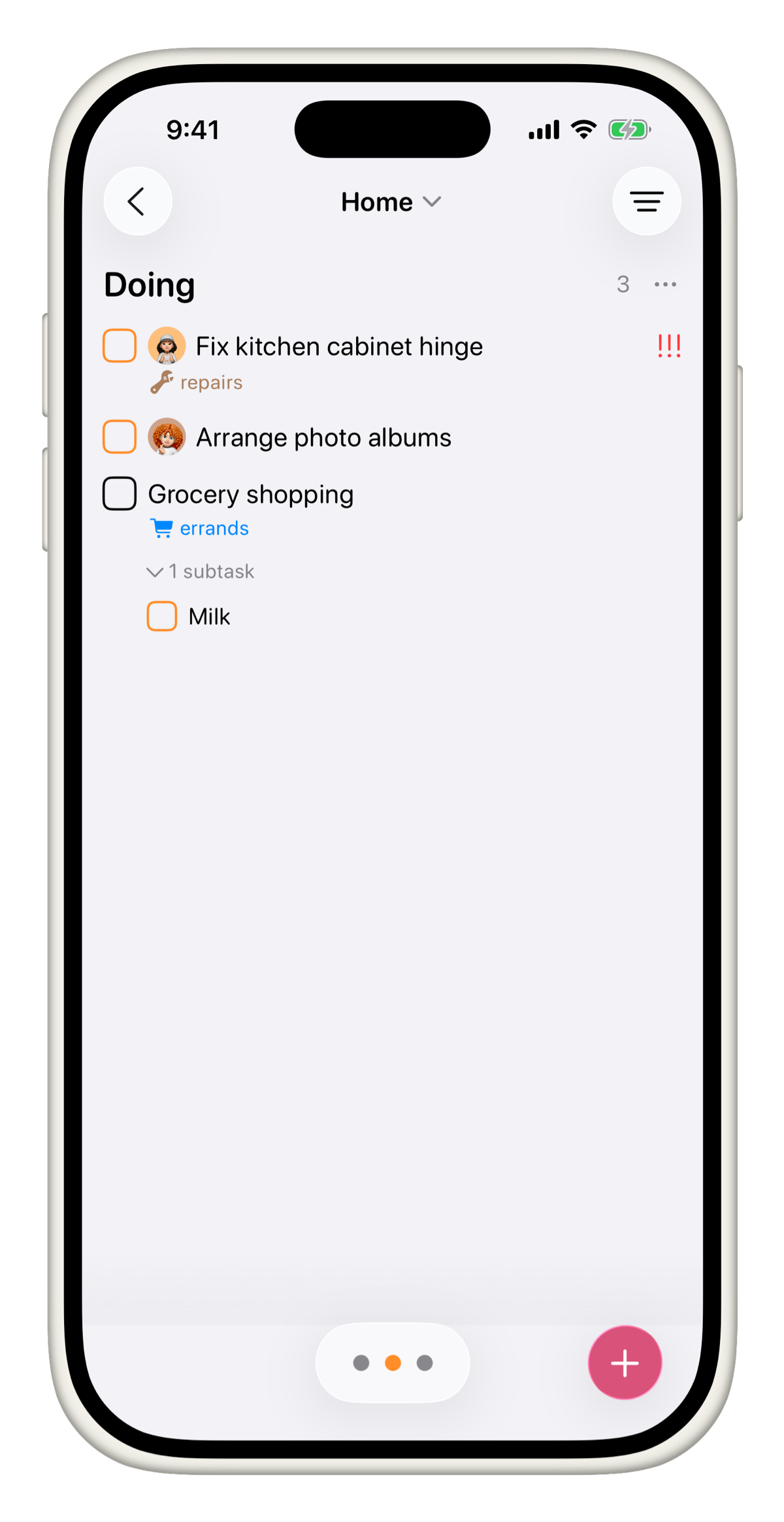
The subtask count on the parent task updates as you complete subtasks, so you can track progress at a glance without opening it.